What is a Dub?
A Dub is a replica of your production database, enhanced with a masking policy, subset policy, and snapshot schedule. These components form a live, up-to-date, sanitized copy of your database.
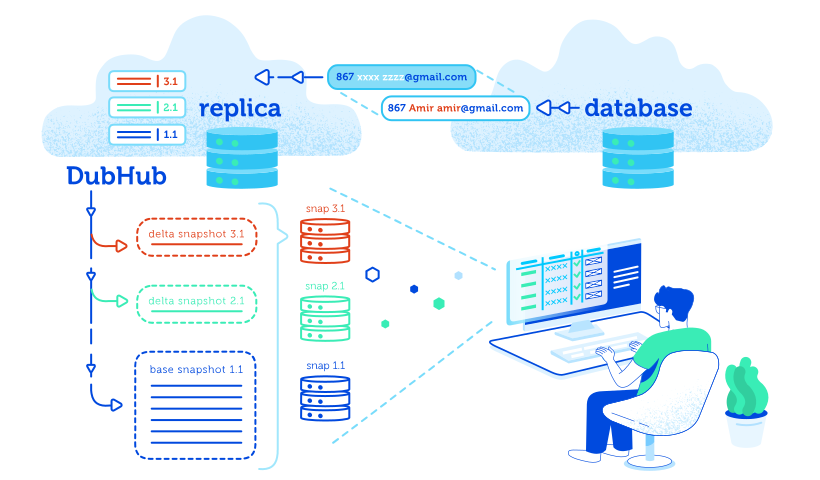
The Parts That Power a Dub
- Source Database - The Dub connects to your source database - typically production - which may contain PII and other sensitive data.
- Replica - A running replica instance within the Dub that stays synchronized with the source database.
- Masking Policy - You can define a masking policy that tells the Dub how to handle sensitive columns. This includes any personally identifiable information (PII) or data your organization deems sensitive. The masking policy is applied to data and transaction packets by our connector in real time as they are transmitted from the source database to the replica.
- Subset Policy - A subset policy allows you to limit the data copied into the replica. This is especially useful in development or testing environments where the full dataset isn't needed, or when you want to focus on a specific portion of the data - such as specific tenants.
- Snapshot - The Dub creates snapshots of the replica database periodically, on-demand or both. You can configure when and how often snapshots are taken.
Running Clones with Baseshift Dubhub
Read-write clones are created from snapshots. These clones are commonly used in development, testing, and demo environments and can also be self-served by developers or analysts for ad-hoc tasks.
Using Baseshift Dubhub clones offers several key benefits:
- Faster development - Work with fully functional, isolated database clones. Each developer gets their own instance, reducing context switching and speeding up iteration.
- Avoid surprises in production - Test changes against fresh, production-like data to catch issues before rollout.
- Lower costs - Use lightweight, on-demand clones instead of maintaining full-scale RDS instances or sharing environments.
- Your entire database environment managed in one system - Manage snapshots and clones across multiple databases in a single system, with consistent masking applied throughout.